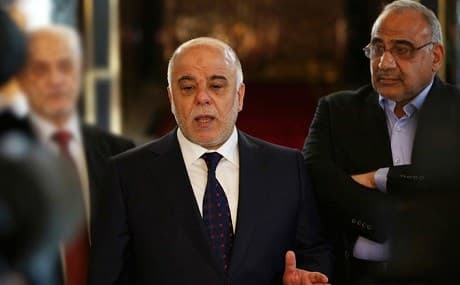

The Iraqi parliament’s Hikma Front has now officially moved into parliamentary opposition, and Muqtada al-Sadr, head of the parliament’s biggest bloc (Saiyrun) and widely considered the kingmaker of Iraqi politics, has threatened to withdraw his backing for the PM if he failed to immediately fill the vacant seats in his cabinet.
Abdul-Mahdi has since pushed back at critics, publishing a record of governmental achievements during his tenure as prime minister.
Despite repeated assertions by former and current senior Iraqi officials that Iraq wants to mediate in US-Iran tensions, a series of rocket and mortar attacks – suspected to have been conducted by Iran-affiliated Shiite militia groups – have hit sites of strategic importance in Iraq in recent weeks , including Balad and al-Taji military bases, an ExxonMobil site in Basra, and Baghdad’s Green Zone.
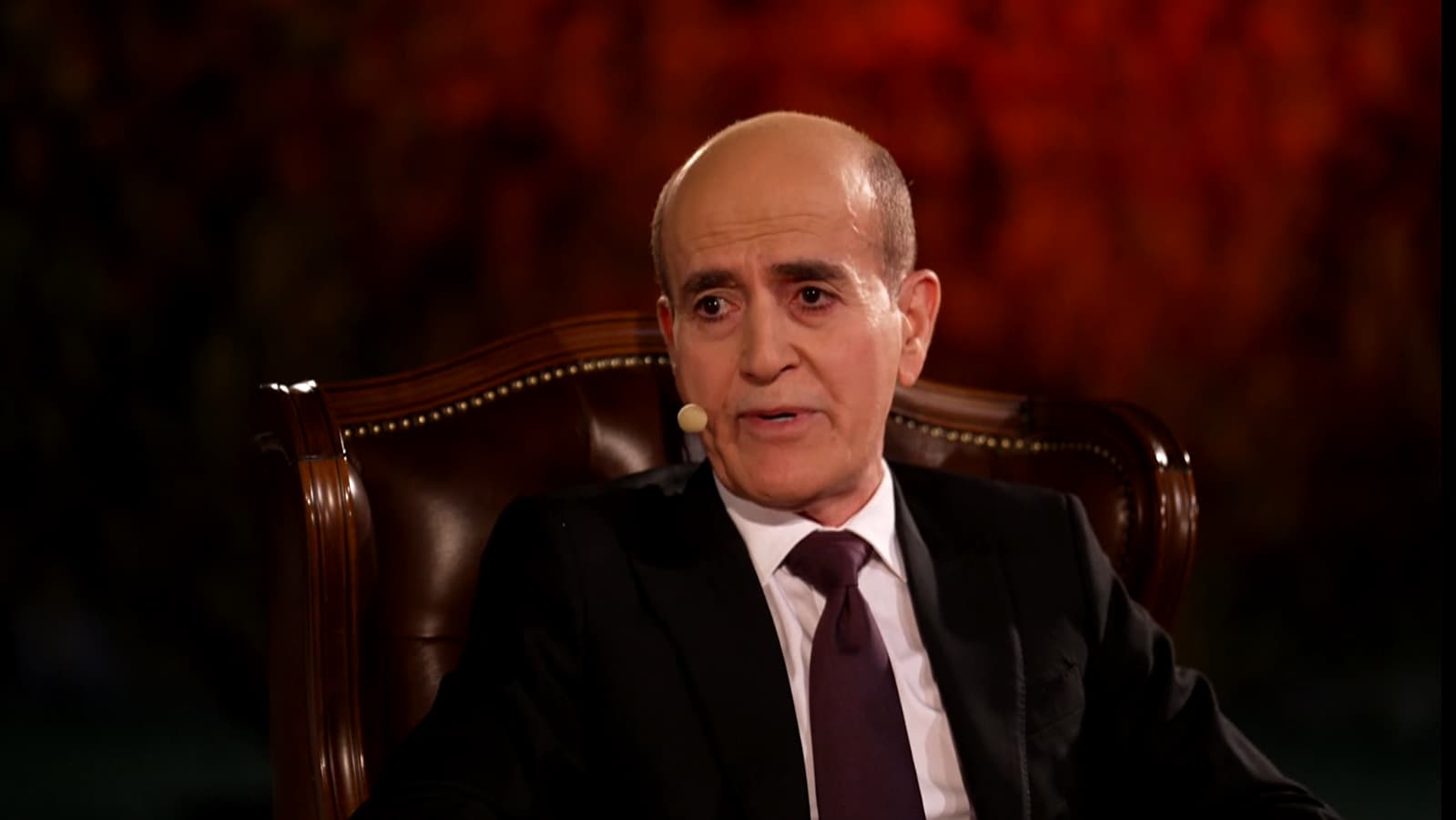
Dr. Ihsan al-Shammari is a political pundit and a lecturer in the Department of Political Sciences at Baghdad University. He is head of the Center for Political Thought. He has worked as a media advisor to Haider al-Abadi.
In an interview with Rudaw this week, Shammari examines the prime minister’s prospects, divisions in Iraq’s powerful Islamic Dawa Party over US-Iran tensions, and relations between Erbil and Baghdad.
Rudaw: Rumor has it Mr. Abadi wants to return as the prime minister. Is that true?
 Sayirun and other political groups have asserted that Abadi might be the most likely successor should Mr. Adil Abdul-Mahdi resign from the premiership
What is the Dawa Party’s stance on the state of US-Iran relations?
There seem to be two wings within the Dawa Party. One, represented by [former Prime Minister Nouri] al-Maliki, is close to Iran, supporting Iranian decision-making. The other wing, representing anywhere between 30 and 40 percent of the party, seems to be working towards a policy of neutrality to shield Iraq from the impacts of the American-Iranian rivalry.
How are the current conditions in Iraq in your opinion? As of late, a number of rockets have been fired at strategic locations, such as places where US troops and staff are stationed. Who do you think is behind these attacks?
The nature of the statements made by some Iran-affiliated figures indicates that the attacks might be part of Iranian maneuvers Without completely eliminating the possibility that a third party was involved [neither Iranian nor Iraqi], I imagine that these attacks will be attributed to groups that are close to Iran. The nature of the statements made by some Iran-affiliated figures indicates that the attacks might be part of Iranian maneuvers.
What should Iraq do to insulate itself from US-Iran fire?
Iraq is adopting a policy of neutrality, aiming to balance common interests and seeking to defuse the crisis by forming a mediatory axis with some Arab and other regional states By making these diplomatic moves, I think [Iraq] has succeeded in establishing a position in which it can balance America and Iran.
How are Erbil-Baghdad relations at present and what is the future of these relations?
Erbil-Baghdad relations are currently in their best shape, as great understandings have been reached on some matters. I believe that the election of Mr. Nechirvan Barzani as president of the Region will greatly contribute to resolving many of the conundrums that caused tense relations. President Barzani has great flexibility and wide-spanning relations, not only with the government but the heads of the political blocs too.
The election of Mr. Barzani was widely welcomed here in Baghdad. I believe [his election] will contribute to improving relations between Erbil and Baghdad Will oil be a problem? How can it be resolved?
Part of the reason why the crisis between Baghdad and Erbil is protracted is because of oil exports. I imagine that President Barzani and the prime minister are seeking to reach a solution for the issue. While an agreement can end the crisis at this stage, I imagine that ratifying the federal Oil and Gas Law will contribute to settling this topic once and for all between Baghdad and Erbil. The most important thing is to reach an agreement on the Law and having it passed through parliament. This is what will fully end the crisis. Yes, we do need an agreement that can facilitate oil relations between Baghdad and Erbil, but I think even more important is ratifying the federal Oil and Gas Law.